

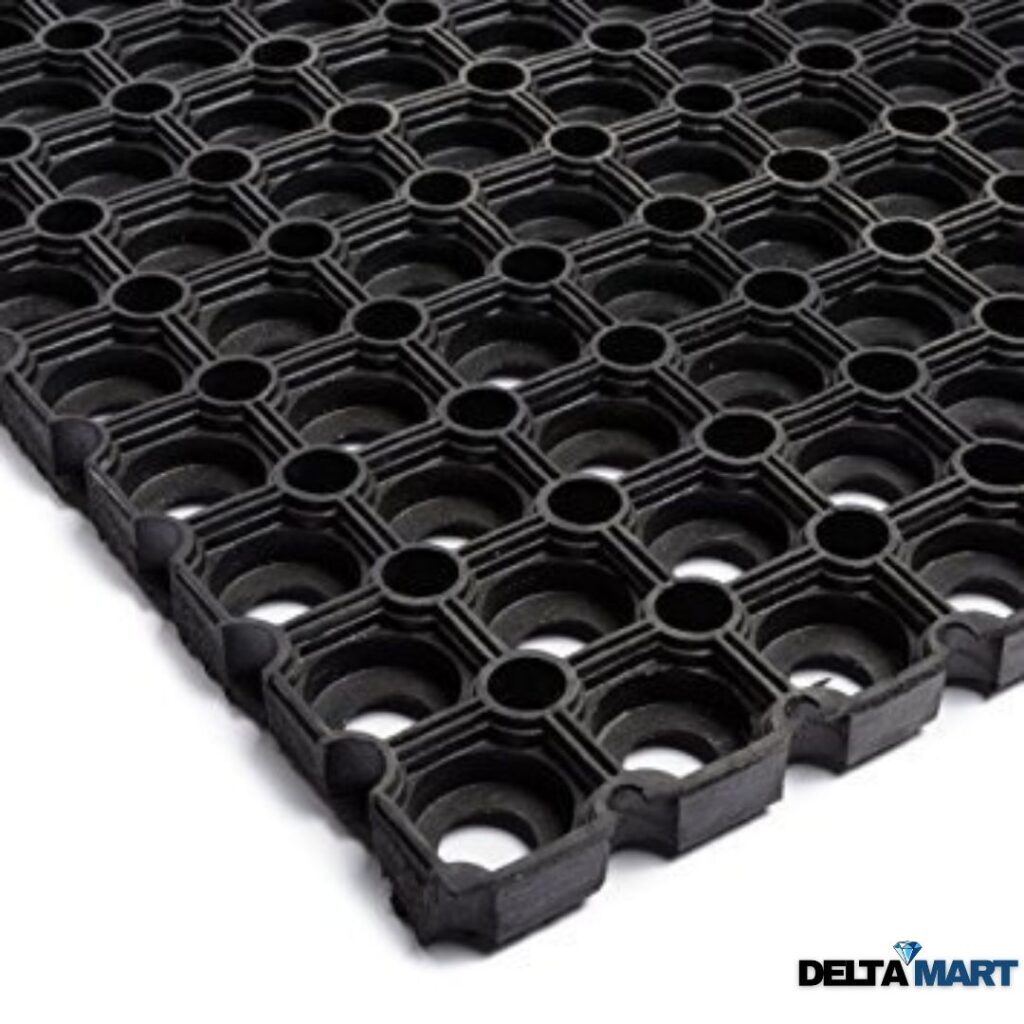
Autumn arrives on a doorstep before it arrives anywhere else. Wet leaves pile up on the bottom step, moss creeps across the access ramp and the first frosty morning turns a familiar garden path into something you tread on with care. Non slip mats are a straightforward way to add grip where people walk every day, whether that is your own back door, a rental property, a community hall or a care home entrance.
Below you will find where they help most, what makes a good outdoor mat and how to fit and care for them through the colder months.
Why outdoor steps, ramps and paths get slippery from autumn onwards
Several things happen at once as the year turns. Rain becomes more frequent and surfaces stay damp for longer because there is less sun and wind to dry them. Fallen leaves break down into a slick layer that is surprisingly treacherous. Algae and moss grow on shaded stone, timber and concrete. And in cold snaps, damp surfaces can freeze, sometimes invisibly.
Steps and ramps are particularly vulnerable because people are changing level and their balance is already working harder. Smooth stone, painted surfaces and timber decking can lose much of their grip when wet. Anyone carrying shopping, pushing a buggy, using a walking aid or simply rushing for the bus is at greater risk.
Where non slip mats help most: steps, access ramps, decking and garden paths
Focus on the places where a slip is most likely and would matter most:
- Front and back door steps, especially the top and bottom treads
- Access ramps for wheelchairs, buggies and walking frames
- Timber decking, which becomes slick in wet weather
- Garden paths that run under trees or stay in shade
- Bin store routes and side passages
- Entrances to sheds, garages and outbuildings
For landlords, community buildings and care settings, a walk around the site after rain is a good way to spot problem areas. Look for surfaces that feel slippery underfoot and places where people instinctively slow down. Our non slip mats range includes options designed for heavy everyday use.
What to look for outdoors: grip pattern, drainage holes and thickness
Outdoor mats face rain, mud, leaves and frost, so they need different qualities from an indoor doormat.
Grip pattern matters first. A textured or raised surface gives shoes something to bite into, even when wet. Drainage is next. Mats with holes let rainwater and melted ice drain through, so feet are not standing in a film of water. Wins Rubber Mats offers rubber mats with holes that work on this principle, and holes also help leaves and grit fall through rather than sitting on top.
Thickness should be chosen with care. A mat that is too thick on a step can create a raised edge and become a trip hazard itself. On steps and ramps, a thinner, well-fixed mat with good grip is often safer than a thick one. Check each product’s intended use and suitability outdoors before buying.
Single mats or rubber rolls? Covering one step vs a long walkway
For individual steps or a single doorway, pre-cut mats are quick and convenient. Choose a size that covers the tread without overhanging, or trim to fit.
For longer routes, such as a ramp, a path or a run of decking, a rubber matting roll lets you cover the whole length with fewer joins. Fewer joins mean fewer edges to catch a foot or a wheel. Our outdoor rubber matting are worth considering for outdoor areas where you need wider coverage.
On a ramp, run the matting in the direction of travel so wheels roll along it rather than bumping across seams. If you are comparing ranges, Wins Rubber Mats also stocks outdoor rubber mats.
Fitting non slip mats securely: cutting to size, fixing down and avoiding trip edges
A mat that moves or curls can cause the very fall it is meant to prevent, so fitting is crucial. Start by cleaning the surface thoroughly, removing moss, algae and debris and letting it dry.
Cut mats to size with a sharp knife and a straight edge, keeping edges neat. On steps, mats should sit flush with the front edge of the tread rather than overhanging it. Fix them down using a method suitable for the surface, such as outdoor-rated adhesive or mechanical fixings, following the manufacturer’s guidance.
Pay special attention to edges. Any lift, curl or gap is a potential trip point. For care homes and public buildings, it is worth checking your approach with whoever is responsible for health and safety on site. For a wider choice of grippy surfaces, Wins Rubber Mats lists an anti slip rubber mat option too.
Winter care: clearing leaves, ice and grit, and knowing when to replace
Even the best mat needs a little looking after through winter:
- Sweep leaves off regularly, especially after windy weather
- Brush through drainage holes so they do not clog
- In icy weather, clear snow and use grit or de-icer as appropriate, checking it will not damage the mat
- Lift and rinse mats occasionally to stop dirt building up underneath
- Check fixings and edges after storms, heavy frost or snow
Replace mats when the grip pattern has worn smooth, when edges have started to curl or crack or when fixings will no longer hold them firmly.
Sure-footed through the winter
Non slip mats are a simple, practical way to make outdoor steps, ramps and paths safer when the weather turns. Choose mats with good grip and drainage, pick single mats or rolls to suit the area, fit them securely and keep them clear of leaves and ice.
To find the right mats for your steps, ramps or walkways, browse the range at Delta Rubber Imports. As an importer of hard-wearing rubber, we keep prices accessible and get deliveries moving swiftly across the UK, so you can be ready before the first hard frost.