

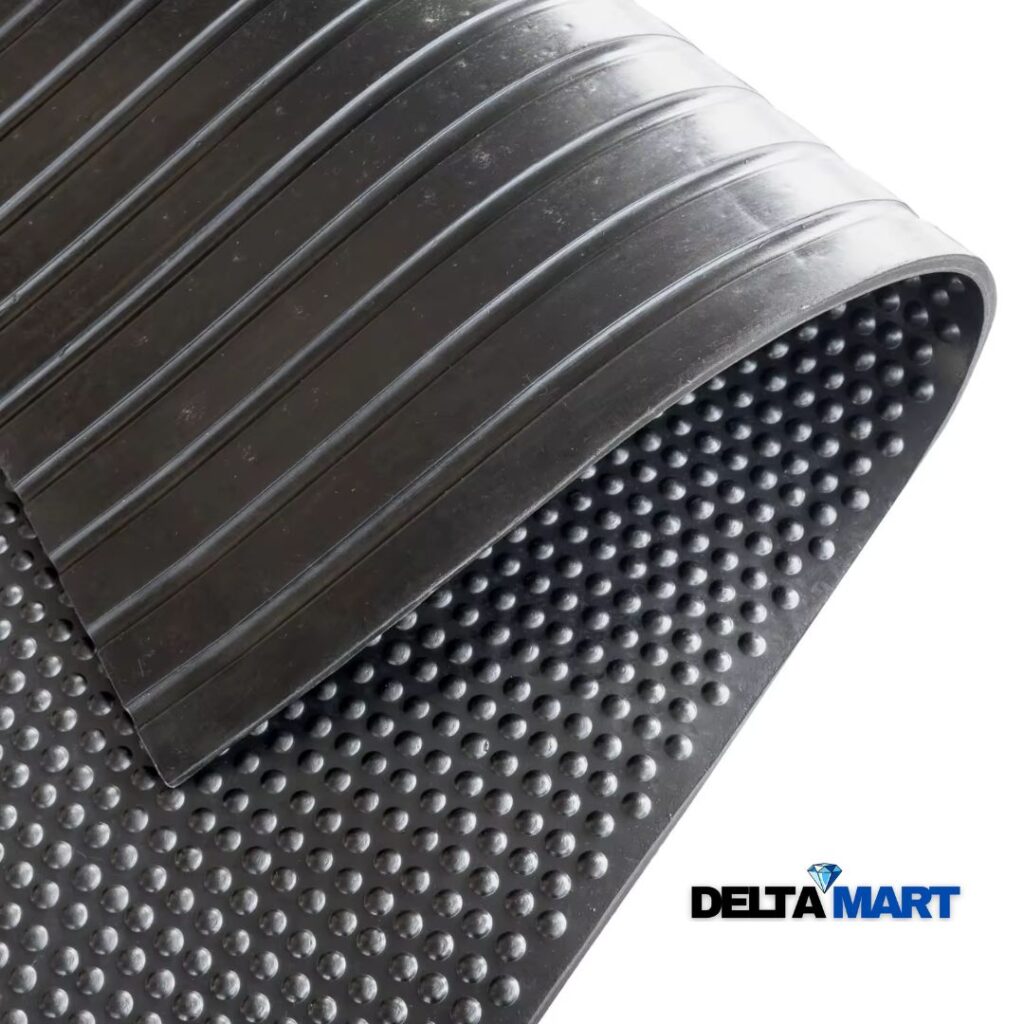
There is a particular sound a loaded barbell makes when it hits a bare garage floor, and it is usually followed by someone checking the concrete for cracks. Whether you deadlift in a garage, run a CrossFit box or coach Olympic lifting, dropped weights put enormous stress on whatever is underneath. Thick rubber gym mats are the first line of defence, and setting them up properly makes a real difference to how well they protect your floor.
So what actually makes a lifting floor work? Below we look at how impact reaches the floor, why density matters as much as thickness and how to build a lifting zone that lasts, whether it is in a home garage or a busy box.
What dropped weights do to floors underneath
When a barbell or dumbbell is dropped, its energy has to go somewhere. On bare concrete, much of it goes into the floor and the equipment. Over time that can mean chipped or cracked concrete, damaged plates and bent bars. Indoors, the impact also creates noise and vibration that travels through the building.
Suspended timber floors are even more vulnerable. Repeated impacts can damage boards and joists and transmit noise to rooms below. Tiled floors may crack, and laminate or vinyl can be dented or punctured.
The aim of matting is to absorb and spread that impact, reducing the force that reaches the floor and the equipment.
How thickness and density work together
Thickness and density are often discussed as if they were the same thing, but they do different jobs.
Thickness gives the impact somewhere to go. A thicker mat has more material to compress, which slows the dropped weight down over a slightly longer distance and reduces the peak force on the floor beneath.
Density determines how the mat responds. A very soft, thick mat may compress easily, but it can feel unstable underfoot and allow a bar to bounce unpredictably. A dense mat spreads load across a wider area and feels firm and stable when you lift.
The best lifting surfaces combine good thickness with good density. Our thick rubber gym mats range includes options suited to lifting areas, and heavy-duty rubber gym mats offer a dense, firm surface for heavier work.
Building a simple lifting area from thick rubber gym mats
You do not need a professional platform to protect your floor. A practical approach is to create a defined lifting zone:
- Choose a spot with enough space for the bar and plates either side, plus room to move around safely
- Lay thick mats to cover the whole area where the bar will land, not just where you stand
- Butt mats tightly together so there are no gaps or lips
- Consider a double layer, or a firmer centre where you stand, if you lift heavy and drop often
Keep the lifting area separate from other training areas so people know where weights may be dropped. If you are comparing options, Wins Rubber Mats offers heavy duty rubber gym flooring that may also suit a lifting zone.
Tiles vs heavy mats for a strength zone
Interlocking gym flooring tiles are lighter and easier to handle. They connect together to cover large areas quickly, which suits whole-gym flooring and spaces that may change. Individual damaged tiles can be replaced without lifting the whole floor.
Heavy single mats are larger, thicker and denser, which makes them a natural choice for the lifting area itself. Their weight keeps them in place under heavy drops, and fewer joins mean fewer weak points.
Many gyms use both: interlocking tiles across the general floor and heavy thick mats in the lifting zone. For comparison, Wins Rubber Mats also stocks rubber gym floor tiles and its range of crossfit gym flooring is aimed at busier gym floors.
Protecting suspended timber floors
If your lifting area is on a suspended timber floor, such as an upstairs room or some garden buildings, take extra care. Timber floors flex and can be damaged by repeated heavy impacts in ways that may not be visible until later.
Thick mats help, but they are not a guarantee of protection. Consider:
- Checking the floor’s suitability with a builder or structural engineer before setting up a heavy lifting area
- Using the thickest, densest mats you can, possibly in multiple layers
- Using bumper plates and avoiding dropping weights from height where possible
- Limiting heavy drops to a ground-floor or concrete area if you have one
When in doubt, lift heavier on concrete and keep timber floors for lighter work.
Care and keeping mats flat
Thick rubber mats are low maintenance, but a little care helps them last:
- Sweep or vacuum regularly to remove chalk, dust and grit
- Clean with warm water and a mild detergent, avoiding harsh solvents
- Rotate mats in the lifting area occasionally to spread wear
- Check for curling edges and press or weight them flat
- Store spare mats flat, not rolled or leaning, to prevent warping
If a mat does curl, lay it flat somewhere warm with weight on the raised edge. Most will settle back into shape.
Building a lifting area that lasts
Thick rubber gym mats protect floors, equipment and the building from dropped weights. Combine good thickness with good density, create a defined lifting zone, choose tiles or heavy mats to suit the space and take extra care on timber floors.
When you are ready to plan the lifting area, the gym range at Delta Rubber Imports is the place to start. Delta Rubber Imports brings in dense, long-wearing rubber at prices that suit home and commercial gyms, with fast UK delivery so you can get back under the bar quickly.