

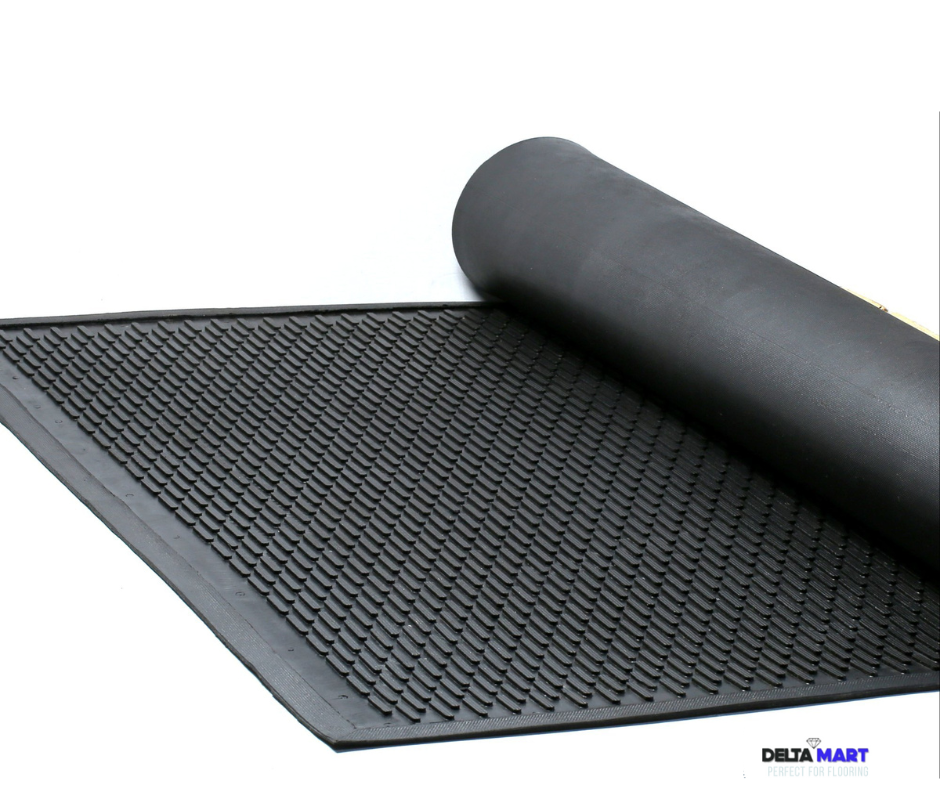
Anyone who has dropped a freshly sharpened chisel onto a concrete floor knows the sinking feeling. A chipped edge, an hour of honing undone and possibly a crack in the floor as well. Workshop floor mats will not stop every accident, but they make the floor far kinder to tools, machinery and the person standing at the bench all day.
Woodworkers, metalworkers and small engineering shops all face versions of the same problem. Here is how to match matting to machines, benches and the mess your work creates.
Why machinery and hard floors don’t mix
Hard concrete floors are strong, but they have drawbacks in a workshop. Machines sitting directly on concrete transmit vibration into the floor and sometimes into the building. That vibration can make machines noisier, may affect the finish of some work and can cause equipment to creep across the floor over time.
Concrete is also unforgiving. Dropped tools chip or break, and the floor itself can crack or spall under repeated impacts. For anyone standing at a bench or machine for hours, concrete is tiring on the feet, legs and back. Rubber matting addresses all of these to some degree.
Noise is worth a special mention if your workshop is a garage attached to the house or a unit with neighbours. The hum of a compressor or the chatter of a planer travels further through a rigid floor than many people expect. Matting is not soundproofing, but it can take the edge off structure-borne noise and make the space more pleasant to work in for long sessions.
Matting under lathes, compressors and pillar drills
Machines with motors and moving parts benefit most from a rubber layer underneath. Lathes, compressors, pillar drills, bandsaws and grinders all vibrate, and a dense rubber mat helps absorb some of it.
Place the mat under the machine’s feet or base, making sure it is large enough to support the whole footprint. Check the manufacturer’s guidance first: some heavy machines need to be bolted directly to the floor, and some need to be perfectly level. If that is the case, consult the manufacturer before adding matting. For lighter bench-top machines, a piece of rubber sheet under the tool can reduce vibration and noise on the bench.
Our industrial rubber mats range includes dense options suited to sitting under machinery. Wins Rubber Mats also stocks a rubber anti vibration mat option, which is worth comparing for specific machines.
Bench-front mats for standing work
Most workshop time is spent standing at a bench, vice or machine. A mat in front of the bench gives a more comfortable surface, helps keep legs moving and adds insulation from a cold floor in winter.
Choose a mat that covers the area you actually stand in, with a little extra width either side. Bevelled edges help prevent trips when you are carrying timber or moving around. If you swap between sitting and standing, make sure a stool or chair can still roll or sit stably on the mat. For longer benches, Wins Rubber Mats’ anti-fatigue industrial mats are designed for this kind of standing work.
Workshop floor mats that protect tools and floors from drops
Workshop floor mats in the main working areas help cushion dropped tools, reducing the chance of chipped edges, broken handles and damaged floors. This is particularly worthwhile around sharpening stations, bench grinders and anywhere you regularly handle edge tools.
Heavier mats, such as our heavy duty garage floor mats, give solid protection in high-traffic areas around benches and machines. They also offer a grippy surface that helps when the floor gets dusty. If you want a broader comparison of ranges, Wins Rubber Mats lists workshop floor mats that may suit your space.
Oil, swarf and sawdust: choosing and cleaning mats
Different workshops produce different mess, and it affects which mats work best and how to clean them.
In metalworking shops, oil, coolant and swarf are common. Some rubber compounds are more resistant to oils than others, so check the product details if your floor regularly sees oil. Swarf can embed itself in some mat surfaces; a stiff brush and a magnet sweeper help keep it under control.
In woodworking shops, sawdust and shavings are the main problem. Mats with a fairly smooth or low-profile surface are easier to sweep and vacuum. Avoid deep patterns where dust collects and is hard to remove.
Whatever you work with, sweep or vacuum regularly, lift mats occasionally to clean underneath and avoid harsh solvents, which can damage some rubber.
Layout tips for small workshops
Space is often tight, so plan your matting with the workflow in mind:
- Map where you stand, where machines sit and how you move between them
- Put mats under machines first, then in front of the main bench
- Keep walkways clear and level, with no mat edges in the main routes
- Leave space around machines for maintenance and safe operation
- Consider separate mats rather than one large one, so you can lift and clean easily
A little planning helps the matting work with the space rather than against it. Sketch the layout before you buy, and you will usually find you need less matting than you first thought, placed more precisely where it counts.
A quieter, safer workshop
Workshop floor mats reduce vibration and noise from machines, protect tools and floors from drops and make long hours at the bench more comfortable. Choose dense mats for machinery, softer standing mats for benches and surfaces that suit the mess your workshop produces.
To kit out your space, head to Delta Rubber Imports and look through the industrial and workshop range. We source solid, durable rubber at sensible prices and dispatch quickly to workshops throughout the UK, so the floor can be sorted between projects.