

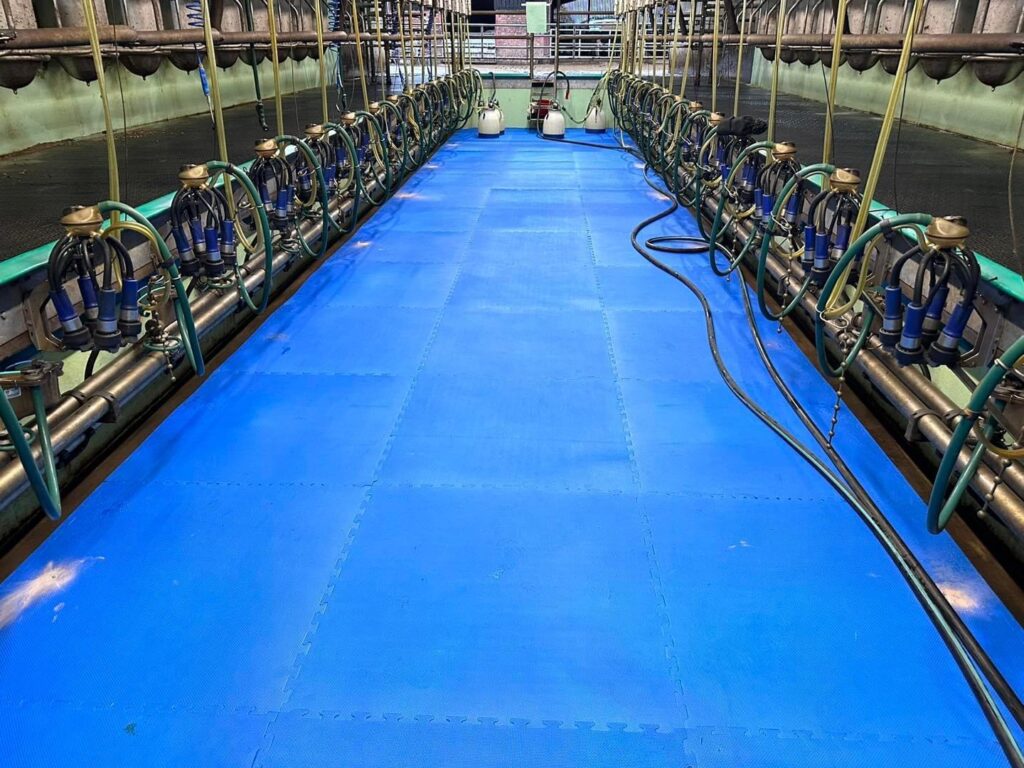
A milking parlour has two very different groups of users, and both spend a lot of time on their feet. Cows walk in, stand on the platform and walk out, two or three times a day. Milkers stand in the pit for hours at a time, often on hard, wet concrete. Milking parlour mats need to serve both, while coping with daily washdowns, chemicals and constant traffic.
The sections below take each area in turn and finish with a plan for fitting the job around milking times.
Two users: cows on the platform, people in the pit
On the platform, cows need confident footing. They enter, turn, stand still while being milked and then exit, sometimes quickly. A slippery platform makes them nervous, slows entry and exit and raises the risk of injury.
In the pit, milkers stand on a fixed spot, moving along the line and reaching up repeatedly. Over a long shift, hard concrete takes a toll on feet, legs and backs. Comfortable, grippy flooring here is not a luxury; it helps people work safely and well.
Treating these as two separate flooring jobs, with different products for each, usually gives the best result.
It also helps to think about the people who are not milking. Relief milkers, vets, foot trimmers and visitors all use the parlour from time to time, often in unfamiliar boots and without the regular team’s feel for where the floor is slippery. A consistent, well-maintained surface protects them too.
Grip and drainage for wet, washed floors
Parlour floors are wet for much of the day. Water, milk, dung and cleaning chemicals all end up on the surface. Mats on the platform need a pattern that grips well when wet and allows water to drain away rather than sitting on top.
Look for mats specified for parlour use, with a textured surface and edges designed to sit tight to the floor. The base underneath must fall towards drains, and drains must stay clear. Our milking parlour mats are designed for these conditions, and Wins Rubber Mats also stocks milking parlour mats if you are comparing patterns and sizes.
Fit matters as much as the mat. Gaps, raised edges and loose fixings can trap muck and become trip hazards for cows and people alike.
Anti-fatigue matting for the milking pit
Standing in the pit for a full milking is hard work. anti-fatigue mats give milkers a cushioned, grippy surface that helps reduce the strain of long shifts on hard concrete.
In the pit, look for mats that drain well, stay put when wet and can be lifted and cleaned easily. Mats should cover the area where milkers actually stand and walk, with bevelled edges to reduce trip risk. Wins Rubber Mats’ anti fatigue mats are another option to consider.
Keep the pit mats in good condition. A curled edge or slick, worn surface can be more dangerous than no mat at all.
Think about pit depth as well. Adding thick matting raises the milker slightly, which can change the working height at the clusters. For most teams the difference is small, but if several people of different heights share milking duties, it is worth standing on a sample mat before committing so everyone can work comfortably.
Collecting yard and exit lane matting
The parlour does not start at the platform. The collecting yard and exit lanes see some of the heaviest cow traffic on the farm, often with crowding, turning and jostling.
Mats in these areas help cows walk confidently, which can improve cow flow into and out of the parlour. Focus on entry points, the turn onto the platform and the exit lane, where cows often speed up. Many farms also look at cubicle beds at the same time, since housing and parlour work often overlap. If the cubicle shed is next on the list, our cow cubical mats sit alongside Wins Rubber Mats’ cow cubical mats as options to weigh up.
Washdowns, chemicals and how long milking parlour mats last
Daily washdowns are essential for hygiene, but high-pressure water and cleaning chemicals take their toll on any floor surface.
To get the most from your mats:
- Follow the manufacturer’s guidance on suitable cleaning products and concentrations
- Rinse chemicals off thoroughly rather than leaving them to sit
- Avoid aiming a pressure washer directly at mat edges and fixings at close range
- Lift and clean underneath mats periodically to remove trapped muck
- Inspect edges and fixings regularly and repair anything loose
A mat that is looked after will generally last much longer than one that is simply blasted and forgotten.
Planning the fit around milking times
Milking does not stop for a refit, so planning is everything. Start by measuring each area carefully, including the platform, pit, collecting yard and exit lanes. Note drains, posts, steps and equipment.
Split the job into stages that fit between milkings. The pit can often be done in a single gap between milkings, while larger areas may need to be done in sections. Make sure the floor is clean and dry before fitting, and allow any adhesives or fixings to cure as recommended before cows return.
Talk to your milking team before you start. They know where the floor is worst, which areas cause cows to hesitate and where they stand most. Their insight will help you prioritise, and involving them early tends to mean the new floor is looked after once it is down.
Better floors for cows and milkers
Good milking parlour mats make life easier for everyone who uses the parlour. Give cows reliable grip and drainage on the platform, give milkers anti-fatigue matting in the pit, extend matting to the collecting yard and exits, and plan the fit around your milking routine.
Explore the parlour and livestock range at Delta Rubber Imports to get started. Our matting is hard-wearing and keenly priced, and quick UK delivery means you can plan the work around your farm rather than around waiting for stock.