

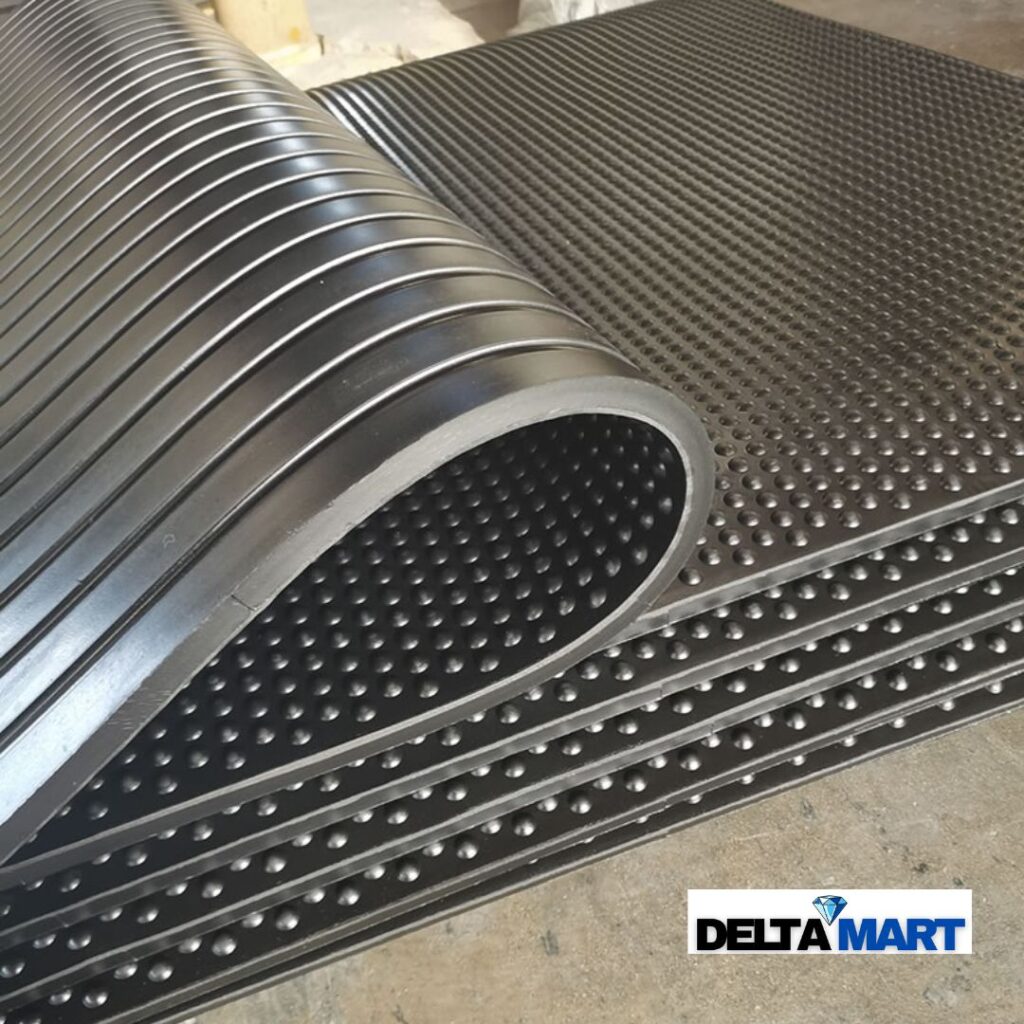
Concrete on a dairy unit takes more punishment than almost any floor in agriculture. Hooves, scrapers, tractors and washdowns gradually polish it smooth, and a surface that once offered good grip can become worryingly slippery, especially when wet with slurry. Rubber mats for cows are one way to restore confident footing on the routes cattle use every single day.
The trick is putting them where they make the most difference and fitting them so they survive scrapers, slurry and daily traffic. Here is a practical approach.
Why worn concrete becomes a slip risk
When concrete is new, its surface texture gives hooves something to grip. Over time, the constant passage of cattle, scraping and cleaning wear that texture away. Grooves that were cut into the concrete can also wear shallow and fill with muck.
A smooth, wet surface makes cows walk cautiously, take shorter strides and sometimes slip. Slips can lead to injuries and lameness and may make cows reluctant to move freely around the shed or to the parlour. Handlers moving cattle on slippery floors are also at greater risk.
Regrooving concrete is one solution, but it does not suit every site. Rubber matting offers an alternative or a complement, giving a softer, grippier surface on top of the existing floor.
There is a comfort benefit as well. Cows spend a good part of each day on their feet, walking to and from the parlour, queuing in the collecting yard and standing at the feed face. A surface with a little give is kinder to feet and legs than hard concrete, and cows that feel secure underfoot tend to move more freely and calmly, which makes daily handling easier for everyone.
Where rubber mats for cows make the biggest difference
Not every square metre needs matting. Focus on the areas with the most traffic or the greatest risk:
- Collecting yards, where cows are crowded together and jostle for position
- Parlour entrances and exits, where cows turn and change direction
- Feed passages and areas in front of feed barriers
- Crossings, where cows move across scraper routes or between buildings
- Slopes and corners, where slips are most likely
- Cow tracks close to buildings, which often take very heavy traffic
Watching how your cows move is the best guide. Where they hesitate, shorten their stride or bunch up, the floor is often part of the problem. Our rubber mats for cows range is designed with these high-traffic routes in mind.
Choosing mats for scraped vs washed areas
How an area is cleaned has a big bearing on the right mat.
In scraped areas, mats must withstand repeated scraper passes without lifting, tearing or catching the blade. The surface pattern should shed muck easily and the edges must be well secured and profiled. Discuss scraper compatibility with your supplier before ordering.
In washed areas, such as some parlour exits and collecting yards, water needs to drain away quickly. Mats with a drainage-friendly surface and a base that falls towards drains work best. Our anti skid mats are one option to consider for these wetter zones.
For areas outside the main building, such as tracks and crossings, durable exterior rubber mats can provide firm footing where cows leave the shed. Wins Rubber Mats also carries rubber mats for livestock, which are worth a look if you are matting similar routes.
Laying and anchoring mats on existing concrete
Preparation determines how well mats perform. The concrete should be clean, sound and as level as possible. Repair cracks and holes, and remove any loose material.
Lay mats according to the manufacturer’s instructions, starting from a fixed reference point such as a wall or kerb. Keep joins tight and stagger them where recommended. Anchor mats with suitable fixings at the recommended spacing, paying particular attention to edges and the leading edge facing scrapers or cow traffic.
On slopes, consider fixing more closely and make sure no seam presents a raised edge to approaching hooves. Wins Rubber Mats’ non slip rubber mats are another product to compare when planning grip on slopes.
Working around scrapers and slurry systems
Mats and scrapers need to work together rather than against each other. Agree with your scraper supplier and mat supplier how the two will interact before you start. Leading edges should be chamfered or protected so the scraper rides over them rather than catching them.
Leave clear channels for slurry and avoid covering drains or gullies. If you use automatic scrapers, check their path once mats are fitted and watch the first few cycles closely. Any sign of lifting should be dealt with immediately, before slurry gets underneath and the problem spreads to neighbouring mats.
Inspecting and replacing mats over time
Regular checks keep mats doing their job. As part of your routine:
- Walk the matted areas weekly, looking for lifting edges, splits or loose fixings
- Check under mats occasionally for slurry build-up or water
- Watch cow movement for signs that grip is reducing
- Replace badly worn or damaged mats promptly
For tracks further from the buildings, an outdoor rubber matting roll from Wins Rubber Mats can be useful when extending coverage along a longer route.
Better footing every day
Rubber mats for cows can transform worn, slippery concrete into a surface cattle walk on with confidence. Focus on collecting yards, parlour approaches, crossings and slopes, match the mat to how each area is cleaned and take care with laying and anchoring.
To plan your project, explore the livestock flooring range at Delta Rubber Imports. Our mats are built to take daily hoof traffic, priced competitively for working farms and dispatched promptly to anywhere in the UK, so your herd can benefit from better footing sooner.