

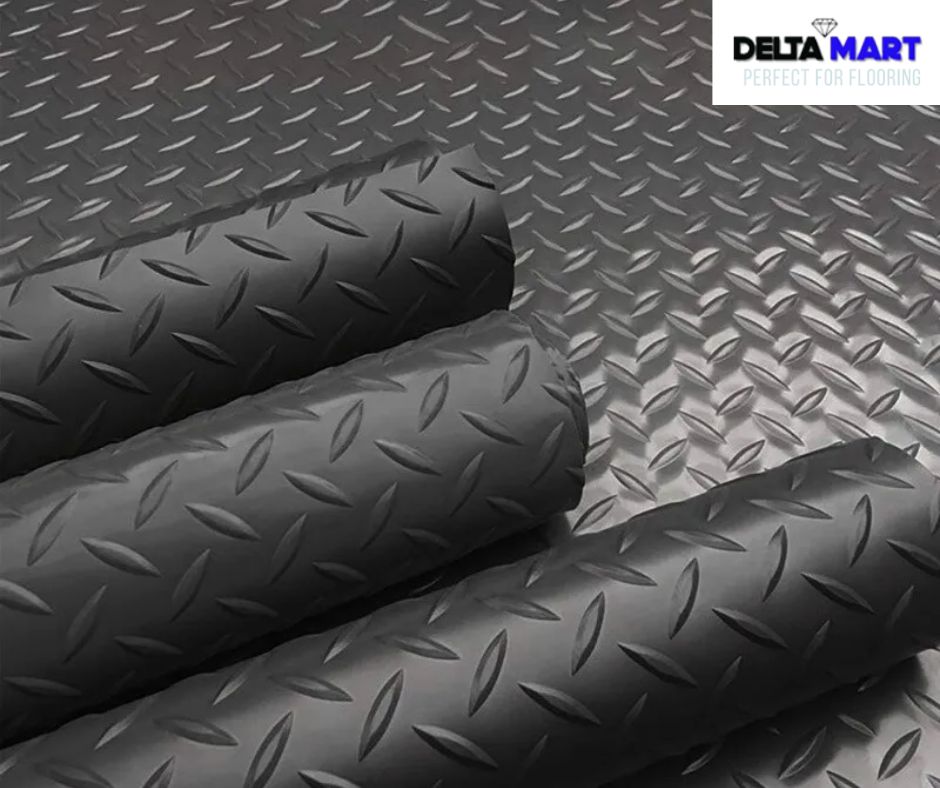
Buying a single mat for your own garage is simple. Buying wholesale rubber mats by the pallet for a farm store, a run of gym fit-outs or a commercial flooring contract is a different job entirely. Consistency, documentation, delivery logistics and the relationship with your supplier all matter as much as the product itself.
If you are about to place a volume order, these are the points worth working through first.
Who buys rubber mats wholesale and why
Trade buyers come from a surprisingly wide range of businesses:
- Agricultural and equestrian retailers stocking stable mats, cow mats and yard matting
- Gym installers fitting out commercial gyms, studios and school sports halls
- Flooring contractors working on warehouses, workshops and commercial premises
- Landscapers and groundworks firms needing ground protection and grass mats
- Online retailers and marketplace sellers building a rubber flooring range
What they share is a need for reliable stock at volume, consistent quality from batch to batch and pricing that leaves room for their own margin or contract budget. Our wholesale rubber mats range is a starting point for businesses buying across several product types.
What to check in wholesale rubber mats: specs, tolerances and consistency
When you buy in volume, small differences multiply. A slight variation in thickness, size or colour may go unnoticed on one mat but becomes very obvious across a gym floor or a stable block.
Before ordering, ask for clear product specifications: dimensions, thickness, weight, material, surface finish and intended use. Ask how much variation is normal between batches and how the supplier manages consistency. For interlocking products, check that tiles from different batches will connect properly.
Where a job will be completed in phases, or a retailer will reorder through the year, it is sensible to ask whether the same product will remain available, and how the supplier will tell you about any changes to specification. Mixing old and new stock on the same floor can show small differences in colour or texture, so plan larger contracts around a single delivery where you can.
For contract work, make sure the specifications match what the client or architect has asked for. If you are supplying commercial flooring for a commercial project, keep a record of the products used in case questions arise later.
Pallet quantities, lead times and delivery planning
Wholesale orders often arrive on pallets, and rubber is heavy. Plan for how deliveries will be received: does the site have a forklift or pallet truck? Can a large vehicle get access? Is there somewhere dry and flat to store stock?
Ask your supplier how many units fit on a pallet for each product, what the lead times are for stock and non-stock lines and how deliveries are scheduled. Lead times vary with product, quantity and season, so build them into your project plan rather than assuming next week. For heavy products such as rubber flooring rolls, confirm the handling requirements in advance.
If you are comparing suppliers, Wins Rubber Mats also offers rubber matting rolls uk, which may be useful for benchmarking.
Mixing product lines on one order
Many trade buyers need a range of products rather than a full pallet of one item. A farm store might want stable mats, cow mats and a few rolls. A gym installer might need tiles, heavy mats and edge strips.
Ask your supplier whether they can combine product lines on a single order or pallet, and whether this affects pricing or delivery. Mixed orders can simplify logistics and reduce the number of deliveries you need to manage. They also let smaller retailers test demand for a new line without committing to a full pallet, which keeps cash and warehouse space free for proven sellers. For a wider view of wholesale rubber flooring, Wins Rubber Mats is another source worth considering.
Samples, testing and documentation to ask for
Before committing to a large order, ask for samples. Handle them, check the finish, test them in the intended setting if possible and compare them with competitor products.
Ask what documentation is available. Depending on the product and its use, this might include technical data sheets, care and cleaning guidance and installation instructions. If your client or project requires specific test results or certifications, ask the supplier directly what they can provide, and do not assume. Keeping this paperwork on file protects you if questions arise after installation. For retailers, clear care guidance is also something you can pass on to your own customers, which helps reduce returns and complaints.
Building a reliable supplier relationship
The best wholesale relationships are built on clear communication and trust over time. A few practical habits help:
- Share your forecast demand so the supplier can plan stock
- Agree how you will handle damaged deliveries or quality issues before they happen
- Keep a single point of contact on both sides
- Review the relationship regularly, including pricing, quality and service
- Give feedback, good and bad, so issues can be addressed early
It can also be wise to know more than one supplier, so you have options if demand spikes. Wins Rubber Mats is among the commercial rubber flooring suppliers trade buyers may want to keep on their list.
Making wholesale buying work for your business
Buying wholesale rubber mats successfully comes down to clear specifications, consistent quality, well-planned deliveries and a supplier you can rely on. Ask the right questions, test samples and keep good records, and volume buying becomes far more straightforward.
To discuss your trade requirements, visit Delta Rubber Imports. As an importer focused on affordable, durable rubber with quick UK delivery, we work with retailers, contractors and fit-out firms who need dependable stock.