

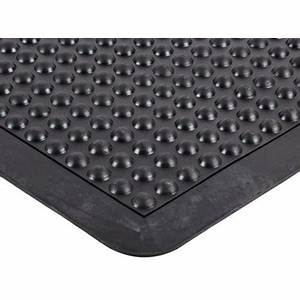
Community halls and classrooms have to become something else at short notice: a yoga studio on Tuesday, an after-school club on Wednesday, a market or rehearsal on Saturday. For that kind of building, interlocking rubber mats are well suited to that life because they build a defined floor, protect the room underneath and can be taken apart by people who are not professional fitters. They only work, though, if someone has planned the quantity, the edges, the storage and the way the hall must look at 9am on Monday.
This guide is for hall committees, schools, churches and pop-up studio operators. It is not a specification for dropped competition weights or for independently assessed play surfacing.
Decide what "temporary" really means
A floor that is down for two hours a week has different needs from a pop-up studio that will sit in the same hall for three months.
Short sessions need a fast layout: a taped outline, tiles that click reliably, and a trolley route from the store that does not go up a awkward stair. Longer residencies can justify more careful edging, a written agreement with the hall about residual marks, and perhaps a mix of interlocking tiles plus a few larger home gym mats under specific kit.
Write down the activities. Chair-based classes, yoga and light circuits are a good match. Event catering with trolleys, indoor football and unplanned children's climbing are not reasons to "just put more tiles down" without further thought.
When you compare other interlocking rubber mats, ask how easily a volunteer can separate them after a warm session. Tiles that lock like grim death are secure in use and miserable at 10pm when the hall must be clear.
Protecting the hall you were lent
Most complaints from hall committees are about marks, smells and edges that damage hired timber or vinyl.
Before you book:
- Photograph the existing floor
- Ask what can be laid, and whether adhesive is forbidden (it usually is)
- Check piano wheels, stackable chair trolleys and exam-desk routes
- Agree who sweeps afterwards
Grit under interlocking tiles will scratch a polished hall floor. Sweep before you lay, and lift the field to sweep again if the session was dirty. Avoid dragging the completed mat across the room; take it apart or lift sections.
If the same organisation also owns general gym mats, do not mix thicknesses in one walking surface. An unexpected step in a public hall is a trip.
Other suppliers' interlocking rubber mats should be judged on the same hire-friendly points: no glue, clean lift, replaceable single tiles.
Layouts that can be taught
Draw one or two standard layouts — "yoga rectangle", "kids' circuit", "exam overflow" — and stick a photo inside the storage cupboard. People copy pictures more reliably than emails.
Start from a straight line, often the stage front or a row of windows, and fully engage every joint. Half-clicked tiles separate under sideways loads and pinch fingers. Keep cut pieces against walls. In a listed or fussy hall, avoiding cuts altogether by building a slightly smaller rectangle is often wiser.
Edges should be obvious. Dedicated ramps or borders help where the public will cross from timber onto rubber. Without them, place the field so the open edge is not on the main route to the kitchen hatch.
Leave fire exits completely clear, including the swing of the doors.
If instructors bring extra rubber gym mats for a particular drill, agree where those sit so they do not create a second, unmatched island in the dark.
Storage, transport and smell
Rubber is heavier than EVA foam. Budget for proper trolleys and for not storing tiles in a damp external shed if you can help it. Stack them dry. A wet stack in a closed cupboard is how halls acquire a smell that gets blamed on "the new floor".
New deliveries can have an odour. Air them in a well-ventilated space before a long residency in a small classroom, especially if children will sit on the floor.
Count tiles in and out. Interlocking systems shrink mysteriously when four volunteer groups share them.
Cleaning between user groups
Group use means you may not know who was on the floor last. Wipe the surface after messy sessions. Remove grit before it is walked back onto the hall floor. Check for lost property in the joints — earrings, Lego, drawing pins.
Do not use oily dressings. Follow a mild cleaning method compatible with the tiles and with the hall's own rules.
Retire a cracked tile rather than leaving a bite taken out of a corner on a children's activity day.
Insurance and booking forms sometimes ask what you will put on the floor. Having a short written description — loose-laid interlocking rubber tiles, no adhesive, lifted after each session — saves an awkward exchange with the hall secretary. If your activity changes, for example from yoga to a children's party with inflatables, review whether the same floor is still appropriate rather than assuming the tiles cover every use.
It also helps to appoint one person in each user group as the floor lead. That person counts the tiles, checks the photo-layout, and is the only one who decides whether a damaged tile stays in service.
Common mistakes
- Building a different layout every week with no drawing
- Dragging a full field across a polished floor
- Blocking a fire door with the last row because "it fitted better"
- Mixing leftover thicknesses
- Leaving wet tiles in a locked deal cupboard until Thursday
Interlocking rubber mats are one of the most hire-friendly ways to create a pop-up studio or classroom activity zone. Plan the layout, protect the floor you were lent, teach volunteers a single way of building and storing the tiles, and the same set will serve many groups without becoming a pile of unmatched squares in a cupboard.